
Showing posts with label Surgery. Show all posts
Showing posts with label Surgery. Show all posts
Jul 13, 2011
Killing Us Softly 3 : Advertising's Image of Women


"As timely and important as ever. . .A must for everyone who cares about media literacy and gender equity."
-- Susan Douglas | author, Where the Girls Are: Growing Up With the Mass Media
Jean Kilbourne continues her groundbreaking analysis of advertising's depiction of women in this most recent update of her pioneering Killing Us Softly series. In fascinating detail, Kilbourne decodes an array of print and television advertisements to reveal a pattern of disturbing and destructive gender stereotypes. Her analysis challenges us to consider the relationship between advertising and broader issues of culture, identity, sexism, and gender violence.
Includes a bonus 25-minute interview with Jean Kilbourne.

Sections:
Does the beauty ideal still tyrannize women? |
Does advertising still objectify women's bodies? |
Are the twin themes of liberation and weight control still linked? |
Is sexuality still presented as women's main concern? |
Are young girls still sexualized? |
Are grown women infantilized? |
Are images of male violence against women still used to sell products?
Jean Kilbourne continues her groundbreaking analysis of advertising's depiction of women in this most recent update of her pioneering Killing Us Softly series. In fascinating detail, Kilbourne decodes an array of print and television advertisements to reveal a pattern of disturbing and destructive gender stereotypes. Her analysis challenges us to consider the relationship between advertising and broader issues of culture, identity, sexism, and gender violence.
Includes a bonus 25-minute interview with Jean Kilbourne.
Sections:
Does the beauty ideal still tyrannize women? |
Does advertising still objectify women's bodies? |
Are the twin themes of liberation and weight control still linked? |
Is sexuality still presented as women's main concern? |
Are young girls still sexualized? |
Are grown women infantilized? |
Are images of male violence against women still used to sell products?
Jean Kilbourne
Jean Kilbourne is internationally recognized for her pioneering work on alcohol and tobacco advertising and the image of women in advertising. Her films, slide lectures and television appearances have been seen by millions of people throughout the world. She was named by The New York Times Magazine as one of the three most popular speakers on college campuses today.Feb 9, 2011
Creative Ads: Toronto Plastic Surgery
 Thanks to the success of US television shows like Extreme Makeover, plastic surgery is fast becoming the norm. The latest advertising campaign for Canadian surgery ‘Toronto Plastic Surgery’ takes it one step further. Ad agency DDB Canada dreamed up this clever idea - allowing consumers to test-drive a new nose shape while drinking their coffee. We love it.
Oct 24, 2010
Whiz-kid invents Surgical Technique Used in Hysterectomies
 14 Year Old Tony Hansberry makes Medical History
nJacksonville, Fla -Tony Hansberry II is just 14 years old, but the precocious student has the medical profession buzzing. Hansberry, who attends Darnell-Cookman Middle/High School in Jacksonville, Florida, the first magnet school for medicine in the country, has discovered a new way to suture patients undergoing hysterectomies.
Challenged to improve a procedure called the endo stitch used in hysterectomies that could not be clamped down properly to close the tube where the patient’s uterus had been, Hansberry devised a vertical way to apply the endo stitch that simplifies the procedure and reduces the risk of complication.
Aug 3, 2010
How do Doctors Choose their Specialties?

This flow chart is obviously made by a Medical doctor hating all Surgeons! :)
1. The Crazy Medical student with the Non Existent Attention Span chooses - "Emergency Medicine".
2. The Crazy Medical student with Significant Attention Span chooses - "Psychiatry".
3. The Sane Medical student who is not so hard working and afraid of the Light Chooses - "Radiology".
4. The Sane Medical student who is not so hard working and Afraid of the Dark and Thinks Big Chooses - "Dermatology".
5. The Sane Medical student who is not so hard working and Afraid of the Dark and Thinks Small Chooses - "Opthalmology".
6. The Sane Medical student who is Very hard working and has a nice attitude, who loves to work with adults chooses - "Medicine".
7. The Sane Medical student who is Very hard working and has a nice attitude, who loves to work with children chooses - "Paediatrics".
8. The Sane Medical student who is Very hard working and whosse attitude doesn't matter, who loves to work when patients are asleep chooses - "Anaesthesia."
9. The Sane Medical student who is Very hard working and whoose attitude doesn't matter, who loves to work when patients are dead chooses - "Pathology".
10. The Sane Medical student who is Very hard working and whoose attitude is mean chooses - "Surgery".

Aug 1, 2010
Insight into the proper care of the Ears
Good intentions to keep your ears clean may be risking your ability to hear. The ear is a delicate and intricate area, including the skin of the ear canal and the eardrum. Therefore, special care should be given to this part of the body. Start by discontinuing the habit of probing the ears with cotton-tipped swabs or other devices.
Here are some simple Do’s and Don'ts regarding earwax and cleaning your ears:
DO
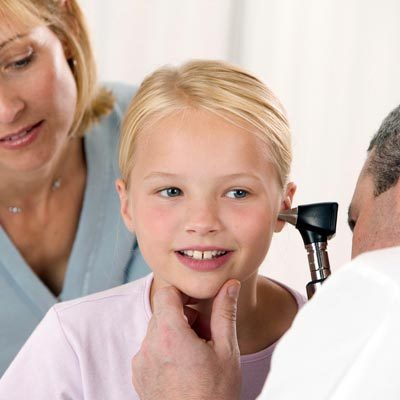
•Understand that earwax is a natural, self-cleaning agent that should not be regularly removed unless it is causing a health problem.
•Use a warm, moist washcloth to clean the outside of your ears, but never insert anything into your ear canal.
•Try placing a few drops of mineral oil, baby oil, glycerin, or commercial drops in the ear to moisten the earwax and let it naturally work its way out of the ear.
•See an otolaryngologist (ENT doctor) if you believe you have discharge, fullness, ear pain, reduced hearing, or other persistent ear symptoms.
•Ask your otolaryngologist about recommended methods of removing excess earwax, which include irrigation (syringing), wax-dissolving eardrops, and manual cleaning with a microscope and specialized instruments.
DON’T
•Never insert anything into your ear canal, regardless of its size or shape. This includes things like cotton-tipped swabs, pens, hair pins, etc.
•Never use an “ear candle” to help remove earwax. An ear candle is a 10” to 15”-long, cone-shaped, hollow candle, typically made of wax-impregnated cloth. Ear candles are proven ineffective for ear wax and may cause burns to the face and hair, obstruction of the ear canal with wax of the candle, or perforation of the membrane that separates the ear canal and the middle ear.
•Do not use any type of irrigation device by yourself. These include items like water picks designed for use in the mouth, or a bulb syringe.
•Don’t ignore the following symptoms:
*Earache, fullness in the ear, or a sensation the ear is plugged
*Partial hearing loss, which may be progressive
*Tinnitus, ringing, or noises in the ear
*Itching, odor, or discharge
*Coughing
Taking proper care of your ears doesn’t mean cleaning them daily. Following a few simple rules will help ensure continued hearing health.
Otolaryngology or ENT (ear, nose and throat) is the branch of medicine that specializes in the diagnosis and treatment of ear, nose, throat, and head and neck disorders. The full name of the specialty is otolaryngology-head and neck surgery. Practitioners are called otolaryngologists-head and neck surgeons, or sometimes otorhinolaryngologists (ORL).
The American Academy of Otolaryngology – Head and Neck Surgery
For more information on earwax, or to learn about other ENT health conditions, visit http://www.entnet.org/healthinformation/ears.cfm

Here are some simple Do’s and Don'ts regarding earwax and cleaning your ears:
DO
•Understand that earwax is a natural, self-cleaning agent that should not be regularly removed unless it is causing a health problem.
•Use a warm, moist washcloth to clean the outside of your ears, but never insert anything into your ear canal.
•Try placing a few drops of mineral oil, baby oil, glycerin, or commercial drops in the ear to moisten the earwax and let it naturally work its way out of the ear.
•See an otolaryngologist (ENT doctor) if you believe you have discharge, fullness, ear pain, reduced hearing, or other persistent ear symptoms.
•Ask your otolaryngologist about recommended methods of removing excess earwax, which include irrigation (syringing), wax-dissolving eardrops, and manual cleaning with a microscope and specialized instruments.
DON’T
•Never insert anything into your ear canal, regardless of its size or shape. This includes things like cotton-tipped swabs, pens, hair pins, etc.
•Never use an “ear candle” to help remove earwax. An ear candle is a 10” to 15”-long, cone-shaped, hollow candle, typically made of wax-impregnated cloth. Ear candles are proven ineffective for ear wax and may cause burns to the face and hair, obstruction of the ear canal with wax of the candle, or perforation of the membrane that separates the ear canal and the middle ear.
•Do not use any type of irrigation device by yourself. These include items like water picks designed for use in the mouth, or a bulb syringe.
•Don’t ignore the following symptoms:
*Earache, fullness in the ear, or a sensation the ear is plugged
*Partial hearing loss, which may be progressive
*Tinnitus, ringing, or noises in the ear
*Itching, odor, or discharge
*Coughing
Taking proper care of your ears doesn’t mean cleaning them daily. Following a few simple rules will help ensure continued hearing health.
Otolaryngology or ENT (ear, nose and throat) is the branch of medicine that specializes in the diagnosis and treatment of ear, nose, throat, and head and neck disorders. The full name of the specialty is otolaryngology-head and neck surgery. Practitioners are called otolaryngologists-head and neck surgeons, or sometimes otorhinolaryngologists (ORL).
The American Academy of Otolaryngology – Head and Neck Surgery
For more information on earwax, or to learn about other ENT health conditions, visit http://www.entnet.org/healthinformation/ears.cfm
What Is an Otolaryngologist?
Otolaryngologists [abr. O.R.L / ENT ] are physicians trained in the medical and surgical management and treatment of patients with diseases and disorders of the ear, nose, throat (ENT), and related structures of the head and neck. They are commonly referred to as ENT physicians.
What do otolaryngologists treat?
Otolaryngologists diagnose and manage diseases of the sinuses, larynx (voice box), oral cavity, and upper pharynx (mouth and throat), as well as structures of the neck and face, as well as many ENT primary care problems in both children and adults.
The ears—Hearing loss affects one in ten North Americans. The unique domain of otolaryngologists is the treatment of ear disorders. They are trained in both the medical and surgical treatment of hearing, ear infections, balance disorders, ear noise (tinnitus), nerve pain, and facial and cranial nerve disorders. Otolaryngologists also manage congenital (birth) disorders of the outer and inner ear.
The nose—About 35 million people develop chronic sinusitis each year, making it one of the most common health complaints in America. Care of the nasal cavity and sinuses is one of the primary skills of otolaryngologists. Management of the nasal area includes allergies and sense of smell. Breathing through, and the appearance of, the nose are also part of otolaryngologists’ expertise.
The throat—Communicating (speech and singing) and eating a meal all involve this vital area. Also specific to otolaryngologists is expertise in managing diseases of the larynx (voice box) and the upper aero-digestive tract or esophagus, including voice and swallowing disorders.
The head and neck—This center of the body includes the important nerves that control sight, smell, hearing, and the face. In the head and neck area, otolaryngologists are trained to treat infectious diseases, both benign and malignant (cancerous) tumors, facial trauma, and deformities of the face. They perform both cosmetic plastic and reconstructive surgery.
What do otolaryngologists treat?
Otolaryngologists diagnose and manage diseases of the sinuses, larynx (voice box), oral cavity, and upper pharynx (mouth and throat), as well as structures of the neck and face, as well as many ENT primary care problems in both children and adults.
The ears—Hearing loss affects one in ten North Americans. The unique domain of otolaryngologists is the treatment of ear disorders. They are trained in both the medical and surgical treatment of hearing, ear infections, balance disorders, ear noise (tinnitus), nerve pain, and facial and cranial nerve disorders. Otolaryngologists also manage congenital (birth) disorders of the outer and inner ear.
The nose—About 35 million people develop chronic sinusitis each year, making it one of the most common health complaints in America. Care of the nasal cavity and sinuses is one of the primary skills of otolaryngologists. Management of the nasal area includes allergies and sense of smell. Breathing through, and the appearance of, the nose are also part of otolaryngologists’ expertise.
 |
Subscribe to:
Posts (Atom)
