Health Care Education [Environmental health, Physical health, Social health, Emotional health, Intellectual health, and Spiritual health] The purpose of health education is to positively influence the health behavior of individuals
as well as the living and working conditions that influence their health.
From a Pulitzer Prize–winning investigative reporter at The New York Times comes
the explosive story of the rise of the processed food industry and its
link to the emerging obesity epidemic. Michael Moss reveals how
companies use salt, sugar, and fat to addict us and, more important, how
we can fight back.
You
already know that salt intake is highly correlated with high blood
pressure and heart disease. And you probably have a vague sense that
processed foods contain a lot of salt. But the specifics are truly
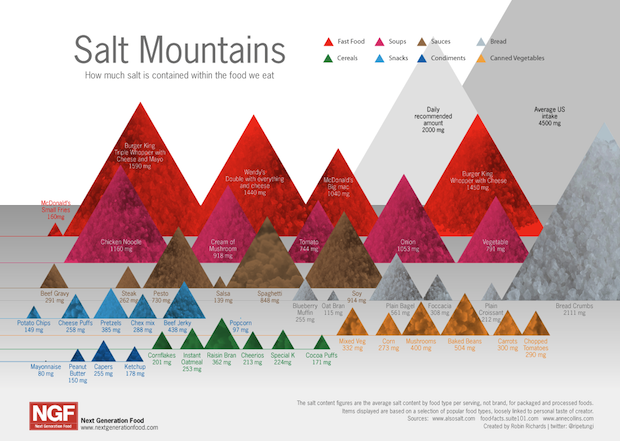
terrifying, as this graphic by Next Generation Food shows.
It's
not exactly the most legible graph--I mean, triangles aren't exactly a
case study in information clarity. But the point comes through. Check
out, for example, that fact that a single Burger King Whopper with
cheese has 75% of your recommended daily salt intake; and the fact that
Americans eat 250% of their recommended daily allotment:
Japanese design agency TO-GENKYO
has designed an innovative hourglass shaped label for packaged meat
which uses a special ink that changes color as ammonia is released
inside the package. As the meat ages, it releases increasing amounts of
the substance, obscuring the barcode at the bottom. Customers can
quickly see if the meat is going bad – and when the barcode becomes
completely covered, it can’t be scanned.
When you’re on a tight budget, the thought of preparing tasty, healthy
meals on a regular basis can seem daunting. Not only is it easy to get
sucked in by grocery merchandising tricks, but it’s also normal for most
of us to fall into a mealtime rut, eating the same foods over and over.
But you’re in control of your kitchen—and if you cook smart, you can enjoy the first-class meals you deserve.
Before you even walk out the door, sit down, write out a list, and
stick to it. Shop once a week, and cut out coupons from the paper (skip
those for processed foods that are expensive, even with the coupon!)
Money-saving fundamentals:
Don’t go shopping on an empty stomach! Make sure you shop after a meal, or after a light snack to help resist temptation.
Shop the perimeter (outside) of the store first. That’s where all of
the healthier choices usually are; you’ll avoid all the more processed,
costly items.
Look for sales on fresh fruits and vegetables — stores get a bargain sometimes, and pass that savings on to you
Choose a large bag of fruit (like apples or pears), instead of the single, large fruits priced per pound.
Buy generic:Generic brands can provide a great savings when shopping
and are often labeled as the store’s brands. The nutritional value of
the food is the same, whether it’s canned, frozen, or bagged foods.
WORLD HEART FEDERATION CALLS FOR URGENT ACTION TO PROTECT CHILDREN’S HEART HEALTH IN WORLD’S MOST POPULOUS CITIES
New S.P.A.C.E strategy to address threat to the cardiovascular health of the world’s urban children
Geneva, 29 September 2011 – On World Heart Day,
the World Heart Federation calls for a new approach to make cities
heart healthier for the children who live in them. The call to action
follows research commissioned by them which shows that increasing
urbanization threatens the current and future heart health of children.
The research results are presented in a new report entitled, Urbanization and Cardiovascular Disease: Raising Heart-Healthy Children in Today’s Cities.
The report summary – made available today – shows how urban life in
low- and middle-income countries – often imposes limitations on the ways
in which children live, and restricts opportunities for heart-healthy
behaviours. In large cities across the globe, urban living actually
facilitates unhealthy behaviour in children, including: physical
inactivity, eating unhealthy foods, and even tobacco use by children as
young as two. Crowded city living environments can also spread diseases
such as rheumatic fever, which if left untreated, can cause rheumatic
heart disease.
The report notes that children are particularly
at risk of the negative health effects of city life, since they are most
dependent on and affected by their living environment. Since
urbanization is continuing to occur rapidly worldwide, urgent action is
needed to prevent an “epidemic” of cardiovascular disease (CVD)
including heart attacks and stroke.
The blueberries found in blueberry bagels, cereals, breads and
muffins are REAL blueberries right? Wrong! Award-winning investigative
journalist Mike Adams, the Health Ranger, exposes the deceptive chemical
ingredients and dishonest marketing of "blueberry" products from
big-name food and cereal companies. The blueberries, it turns out, are
made from artificial colors, hydrogenated oils and liquid sugars. See
more episodes at www.FoodInvestigations.com
Blueberries have long been
touted as a superfood, high in antioxidants,
vitamin C, and manganese. And unlike other superfoods like acai
berries, bee pollen, and wakame seaweed, blueberries are accessible
and attractive, so they're an easy sell to anyone skeptical of
health food.
So this reputation could be why blueberries are in so many
packaged foods, from muffin mixes to salad dressings. They appear
to add nutrition and deliciousness that might otherwise be lacking.
Nevermind that actual, fresh blueberries are only in season about 2
to 3 months out of the year -- the blueberry harvest goes on all
year at the grocery store.
But have you actually read the labels on those supposedly
blueberry-filled products?
Some of them, like Target Blueberry Bagels and General Mills
Total Pomegranate Blueberry Cereal, might be fooling consumers into
thinking the food has something it doesn't. While
manufacturers state they're still within the U.S.'s
admittedly loose labeling laws, many of those blueberry-promoting
products are made without genuine blueberries.
The Consumer Wellness Center
recently produced a Food Investigations video
that looked at the actual blueberry content of several widely
available packaged foods. This expose shows how Kellogs, General
Mills, Betty Crocker, and other brands advertise plump, whole
blueberries in their cereals and mixes, but deliever dextrose, corn
flour, partially hydrogenated soybean oil, sugar, citric acid,
artificial flavor, and food colorings Blue #1 and Red #40
instead.
World Breastfeeding Week is celebrated every year from 1 to 7 August in more than 120 countries to encourage breastfeeding and improve the health of babies around the world. It commemorates the Innocenti Declaration made by WHO and UNICEF policy-makers in August 1990 to protect, promote and support breastfeeding.
Breastfeeding is the best way to provide newborns with the nutrients they need. WHO recommends exclusive breastfeeding until a baby is six months old, and continued breastfeeding with the addition of nutritious complementary foods for up to two years or beyond.
Introduction to Breastfeeding
Breast milk is thought to be the best form of nutrition for neonates and infants. The properties of human milk facilitate the transition of life from in utero to ex utero. This dynamic fluid provides a diverse array of bioactive substances to the developing infant during critical periods of brain, immune, and gut development. The clinician must be familiar with how the mammary gland produces human milk and how its properties nourish and protect the breastfeeding infant.
Omega-3 fatty acids are considered essential fatty acids: They are necessary for human health but the body can' t make them -- you have to get them through food.
Omega-3 fatty acids can be found in fish, such as salmon, tuna, and halibut, other seafood including algae and krill, some plants, and nut oils.
Also known as polyunsaturated fatty acids (PUFAs), omega-3 fatty acids play a crucial role in brain function as well as normal growth and development. They have also become popular because they may reduce the risk of heart disease.
The American Heart Association recommends eating fish (particularly fatty fish such as mackerel, lake trout, herring, sardines, albacore tuna, and salmon) at least 2 times a week.
Research shows that omega-3 fatty acids reduce inflammation and may help lower risk of chronic diseases such as heart disease, cancer and arthritis.
If you count calories, food journal, or are simply concerned with keeping track of what exactly you’re consuming each day, then you must try the Daily Burn Food Scanner app for the iPhone. This hot new app might be the best new thing to happen in dieting and weight loss. Using the camera in your iPhone (any model), you can scan the UPC code on packaged foods, and within seconds have the complete food label in front of you. The best part, it will also log all of those nutrition facts for you. Tracking and counting calories has never been easier, as Daily Burn’s Food Scanner app currently has 200,000 foods in its database. This is ideal because you’re not just limited to scanning packaged, processed foods, you can also log fresh, whole foods – like fruits, vegetables, or meat. While you can’t scan these items without a UPC, you can access their nutrition information.
Vitamins are substances that your body needs to grow and develop normally. There are 13 vitamins your body needs. They are vitamins A, C, D, E, K and the B vitamins (thiamine, riboflavin, niacin, pantothenic acid, biotin, vitamin B-6, vitamin B-12 and folate). You can usually get all your vitamins from the foods you eat. Your body can also make vitamins D and K. People who eat a vegetarian diet may need to take a vitamin B12 supplement.
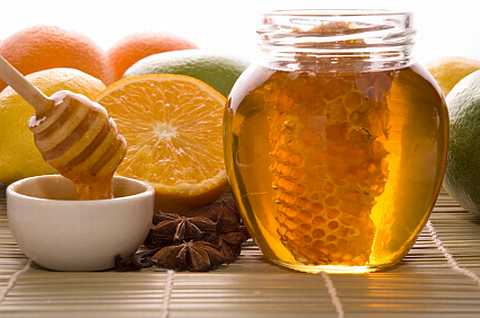
Honey is a mixture of sugars and other compounds. With respect to carbohydrates, honey is mainly fructose (about 38.5%) and glucose (about 31.0%), making it similar to the synthetically produced inverted sugar syrup which is approximately 48% fructose, 47% glucose, and 5% sucrose.Honey's remaining carbohydrates include maltose, sucrose, and other complex carbohydrates.As with all nutritive sweeteners, honey is mostly sugars and contains only trace amounts of vitamins or minerals.
Honey also contains tiny amounts of several compounds thought to function as antioxidants, including chrysin, pinobanksin, vitamin C, catalase, and pinocembrin.The specific composition of any batch of honey depends on the flowers available to the bees that produced the honey.
Typical honey analysis.
Fructose: 38.2%
Glucose: 31.3%
Sucrose: 1.3%
Maltose: 7.1%
Water: 17.2%
Higher sugars: 1.5%
Ash: 0.2%
Other/undetermined: 3.2%
Its glycemic index ranges from 31 to 78, depending on the variety.
Honey has a density of about 1.36 kilograms per liter (36% denser than water).