Showing posts with label Conditions and Diseases. Show all posts

Mar 21, 2012

World Down Syndrome Day 21 March

"On this day, let us reaffirm that persons with Down syndrome are entitled to the full and effective enjoyment of all human rights and fundamental freedoms. Let us each do our part to enable children and persons with Down syndrome to participate fully in the development and life of their societies on an equal basis with others. Let us build an inclusive society for all."
                                                                                             Secretary-General Ban Ki-moon

Down syndrome is a naturally occurring chromosomal arrangement that has always been a part of the human condition, exists in all regions across the globe and commonly results in variable effects on learning styles, physical characteristics or health.
Adequate access to health care, to early intervention programmes and to inclusive education, as well as appropriate research, are vital to the growth and development of the individual.

In December 2011, the General Assembly declared 21 March as World Down Syndrome Day (A/RES/66/149). The General Assembly decided, with effect from 2012, to observe World Down Syndrome Day on 21 March each year, and Invites all Member States, relevant organizations of the United Nations system and other international organizations, as well as civil society, including non-governmental organizations and the private sector, to observe World Down Syndrome Day in an appropriate manner, in order to raise public awareness of Down syndrome.


via @ http://www.un.org/en/events/downsyndromeday/
Enhanced by Zemanta

Nov 1, 2011

November 2011- Health Observations and Events


Awareness Event Coverage Related Organization
Muscular Dystrophy Awareness MonthAustralia Muscular Dystrophy Australia
Crohn's and Colitis Awareness MonthCanada Crohn's & Colitis Foundation of Canada
Amaryllis MonthCanada Huntington Society of Canada
Cardio Pulmonary Resuscitation Awareness (CPR) MonthCanada Heart and Stroke Foundation of Canada
Diabetes Awareness MonthCanada Canadian Diabetes Association
Hemophilia Awareness MonthCanada Canadian Hemophilla Society
Osteoporosis MonthCanada Osteoporosis Canada
National Marrow Awareness MonthUnited States National Marrow Donor Program
National Hospice MonthUnited States The National Hospice and Palliative Care Organization
Diabetic Eye Disease MonthUnited States Prevent Blindness America
National Healthy Skin MonthUnited States American Academy of Dermatology
Prematurity Awareness MonthUnited States March of Dimes
National Epilepsy MonthUnited States Epilepsy Foundation
American Diabetes MonthUnited States American Diabetes Association
Pancreatic Cancer Awareness MonthUnited States Pancreatic Cancer Action Network
National Alzheimer's Disease Awareness MonthUnited States Alzheimer's Association
Pulmonary Hypertension Awareness MonthUnited States Pulmonary Hypertension Association
Lung Cancer Awareness MonthWorldwide Macmillan Cancer Support

November 2011 Health Current Events - Weeks

Event Date Nation Organisation
Scleroderma Awareness Week 3rd Nov - 9th Nov United Kingdom Raynauds & Scleroderma Association
Mouth Cancer Awareness Week 11th Nov - 17th Nov United Kingdom Mouth Cancer
GERD Awareness Week 18th Nov - 24th Nov Worldwide IFFGD
Diabetes Awareness Week 18th Nov - 24th Nov New Zealand Diabetes New Zealand

November 2011 Health Events - Days

Event Date Nation Organization
World Diabetes Day 14th Nov Worldwide World Diabetes Day
Great American Smokeout Day 20th Nov United States American Cancer Society

Sep 29, 2011

Urbanization and Cardiovascular Disease: Raising Heart-Healthy Children in Today’s Cities

WORLD HEART FEDERATION CALLS FOR URGENT ACTION TO PROTECT CHILDREN’S HEART HEALTH IN WORLD’S MOST POPULOUS CITIES

New S.P.A.C.E strategy to address threat to the cardiovascular health of the world’s urban children

Geneva, 29 September 2011 – On World Heart Day, the World Heart Federation calls for a new approach to make cities heart healthier for the children who live in them. The call to action follows research commissioned by them which shows that increasing urbanization threatens the current and future heart health of children.


The research results are presented in a new report entitled, Urbanization and Cardiovascular Disease: Raising Heart-Healthy Children in Today’s Cities. The report summary – made available today – shows how urban life in low- and middle-income countries – often imposes limitations on the ways in which children live, and restricts opportunities for heart-healthy behaviours. In large cities across the globe, urban living actually facilitates unhealthy behaviour in children, including: physical inactivity, eating unhealthy foods, and even tobacco use by children as young as two. Crowded city living environments can also spread diseases such as rheumatic fever, which if left untreated, can cause rheumatic heart disease.

The report notes that children are particularly at risk of the negative health effects of city life, since they are most dependent on and affected by their living environment. Since urbanization is continuing to occur rapidly worldwide, urgent action is needed to prevent an “epidemic” of cardiovascular disease (CVD) including heart attacks and stroke.

Sep 13, 2011

September 2011 Health Observances

Awareness Event Coverage Related Organization
Ovarian Cancer Awareness MonthCanada National Ovarian Cancer Association
Arthritis Awareness MonthCanada Arthritis Society
Muscular Dystrophy MonthCanada Muscular Dystrophy Canada
Sickle Cell Awareness MonthUnited Kingdom Sickle Cell Society
National Sickle Cell MonthUnited States Sickle Cell Disease Association of America
Ovarian Cancer Awareness MonthUnited States National Ovarian Cancer Coalition
National Cholesterol Education MonthUnited States NHLBI
Gynecologic Cancer Awareness MonthUnited States Women's Cancer Network
Reye's Syndrome Awareness WeekUnited States National Reye's Syndrome Foundation
Children's Eye Health and Safety MonthUnited States Prevent Blindness America
National Alcohol and Drug Addiction Recovery MonthUnited States Recovery Month
Leukemia and Lymphoma Awareness MonthWorldwide The Leukemia & Lymphoma Society

September 2011 Health Current Events - Weeks

Event Date Nation Organisation
National Asthma Week 1st Sep - 7th Sep Australia The Asthma Foundation of Victoria
Suicide Prevention Week 2nd Sep - 8th Sep United States American Association of Suicidology
Migraine Awareness Week 6th Sep - 12th Sep United Kingdom Migraine Action Association
National Stroke Week 15th Sep - 21st Sep Australia Stroke Foundation
National Eczema Week 17th Sep - 21st Sep United Kingdom The National Eczema Society

September 2011 Health Events - Days

Event Date Nation Organization
Fetal Alcohol Syndrome (FAS) Awareness Day 9th Sep Worldwide FAS Day
Suicide Prevention Day 10th Sep Worldwide World Health Organization
Worldwide Lymphoma Awareness Day 15th Sep Worldwide Lymphoma Coalition
World Alzheimer's Day 21st Sep Worldwide Alzheimer's Disease International
Ataxia Awareness Day 25th Sep Worldwide Ataxia Awareness
World Heart Day 28th Sep Worldwide World Heart Federation
Enhanced by Zemanta

Mar 23, 2011

Clinical Aspects of Priapism -[Abnormal Persistent Erection of the Penis]

Introduction


Priapism is defined as an abnormal persistent erection of the penis. It is an involuntary prolonged erection unrelated to sexual stimulation and unrelieved by ejaculation. As with many medical emergencies, the saying "time is tissue" holds true for priapism. This condition is a true urologic emergency, and early intervention allows the best chance for functional recovery.

Pathophysiology

Priapism is the result of persistent engorgement of the corpora cavernosa of the penis, originating from a disturbance in the mechanisms that control normal penile detumescence, depicted in the image below. In most cases, the ventral corpora spongiosum and glans penis remain flaccid.


Two types of priapism are generally described.
           ^Arterial high-flow priapism usually is secondary to a rupture of a cavernous artery and unregulated flow into the lacunar spaces. This rare type of priapism is usually not painful and results from penetrating penile trauma or a blunt perineal injury.
           ^Low-flow priapism is usually due to full and unremitting corporeal veno-occlusion where venous stasis and deoxygenated blood pools within the cavernous tissue. Prolonged veno-occlusive priapism results in fibrosis of the penis and a loss of the ability to achieve an erection. Significant changes at the cellular level are noted within 24 hours in veno-occlusive priapism, whereas arterial priapism is not associated with fibrotic change.

Jan 9, 2011

Heterochromic Iris

Heterochromia= is the presence of different colored eyes in the same person. 

Heterochromia is uncommon in humans, but quite common in dogs (such as Dalmatians and Australian sheep dogs), cats, and horses.

Causes:Most cases of heterochromia are hereditary, caused by a disease or syndrome, or due to an injury. Sometimes one eye may change color following certain diseases or injuries.
Specific causes of eye color changes include:
  • Bleeding (hemorrhage)
  • Familial heterochromia
  • Foreign object in the eye
  • Glaucoma, or some medications used to treat it
  • Injury
  • Mild inflammation affecting only one eye
  • Neurofibromatosis
  • Waardenberg syndrome

When to Contact a Medical Professional

Consult your health care provider if you notice new changes in the color of one eye, or two differently colored eyes in your infant. A thorough eye examination is needed to be sure this isn't a symptom of a medical problem.
Some conditions and syndromes associated with heterochromia, such as pigmentary glaucoma, can only be detected by a thorough eye exam.

What to Expect at Your Office Visit

Your health care provider may ask the following questions to help evaluate the cause:
  • Did you notice the two different eye colors when the child was born, shortly after the birth, or recently?
  • Are any other symptoms present?
An infant with heterochromia should be examined by both a pediatrician and an ophthalmologist for other possible problems.
A complete eye examination can rule out most causes of heterochromia. If there doesn't seem to be an underlying disorder, no further testing may be necessary. If another disorder is suspected, diagnostic tests, such as blood tests or chromosome studies, may be done to confirm the diagnosis.
Enhanced by Zemanta

Dec 24, 2010

Get Your Blood Energy Potion :)

Blood Energy Potion Girl Classy


  •  Blood-lust affects almost 100% of people with vampirism. 96% of beings who crave blood on a regular basis have been turned and the remaining four percent are human social deviants. It is important to know that there is no cure for Bloodlust, but with proper treatment, it can be managed.
  • Depending on how long ago you were turned, the symptoms of Bloodlust can range from manageable to seemingly uncontrollable. Mild symptoms can result in embarrassing situations such as being caught feeding off of your family’s pet, or worse your neighbor’s. Unchecked cravings may result in large-scale hunts with eventual staking, decapitation, forced sunlight exposure, or combinations of these.

Dec 20, 2010

Important aspects about Down Syndrome

  • What is Down Syndrome?
        Down syndrome (also called Trisomy 21  ) is a genetic disorder that occurs in approximately 1 of 800 live births. It is the leading cause of cognitive impairment.
  • Down syndrome is associated with mild to moderate learning disabilities, developmental delays, characteristic facial features, and low muscle tone in early infancy. 
  • Many individuals with Down syndrome also have heart defects, leukemia, early-onset Alzheimer's disease, gastro-intestinal problems, and other health issues. The symptoms of Down syndrome range from mild to severe.
  • Life expectancy for individuals with Down syndrome has dramatically increased over the past few decades as medical care and social inclusion have improved.

Dec 1, 2010

World AIDS Day - 1 December

                                                                    World AIDS Day
                                                                                1 December


                    In 1988, the General Assembly expressed deep concern at the pandemic proportions of the acquired immunodeficiency syndrome (AIDS). Noting that the World Health Organization had declared 1 December 1988 World AIDS Day, the Assembly stressed the importance of observing that occasion (resolution 43/15). Today, over 41 million people are living with HIV/AIDS. To combat HIV/AIDS , malaria and other diseases is one of the Millennium Development Goals which all 191 United Nations Member States have pledged to meet by the year 2015.
The World AIDS Campaign (WAC) has chosen as its theme from 2005 to 2010:
“Stop AIDS. Keep the Promise.”


Oct 16, 2010

Aloe Vera Plant [Uses and Benefits]


          Aloe Vera is a species of Aloe, native to northern Africa.Its era has long been a popular houseplant. Often called the 'miracle plant' or the 'natural healer', Aloe Vera is a plant of many surprises. It flourishes in warm and dry climates, and to many people it looks like a cactus with fleshy thorny leaves. In fact it is a member of the Lily family, staying moist where other plants wither and die by closing its pores to prevent moisture loss.

There are around 400 species of Aloe, but it is the Aloe Barbadensis Miller (Aloe Vera or "true aloe") plant which has been of most use to mankind because of the medicinal properties it displays.
     Some species, particularly Aloe vera are used in alternative medicine and in the home first aids. Both the translucent inner pulp and the resinous yellow aloin from wounding the Aloe plant are used externally to relieve skin discomforts. As an herbal medicine, aloe vera juice is commonly used internally to relieve digestive discomfort "aloe for heartburn".

Oct 14, 2010

What is Sexsomnia. Is it Real...?

aSleep sex or sexsomnia is a form of non-rapid eye movement (NREM) parasomnia (similar to sleepwalking) that causes people to engage in sexual acts such as masturbation, fondling, sexual intercourse and sexual assault or rape while they are asleep. The proposed medical diagnosis is NREM Arousal Parasomnia - Sexual Behavior in Sleep, and is considered to be a distinct variant of sleepwalking .There are often unpleasant consequences associated with sleep sex and it has been used as a criminal defense in rape cases. Other negative effects include feelings of shame and embarrassment and also can cause relationship issue and stress.
Sex, Sleep or Scrabble?: Seriously Funny Answers to Life's Quirkiest Queries             Those who suffer from sexsomnia have confusional arousals and rarely remember the event. People who have a history of doing other sleep activities such as sleepwalking or sleep talking are more likely to exhibit sexsomnia episodes. Factors that may increase episodes of sleep sex are alcohol, sleep deprivation or even sleep apnea and other sleep disruptions.
 Sexsomnia episodes could be triggered by the contact with bed partner.In some cases sexualised movements during sleep could be caused by sleep related epilepsy which results in sexual arousal, thrusting and orgasms.

Sep 27, 2010

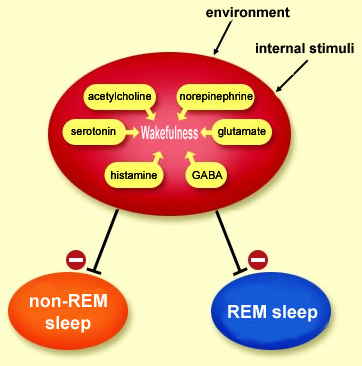
REM and NREM Sleep

  • Overview
    Normal sleep has 2 distinct states:
  1. non-rapid eye movement (NREM)
  2. rapid eye movement (REM) sleep.   
NREM sleep is divided into 4 stages.During REM sleep, rapid eye movements occur,
  •  breathing becomes irregular, 
  • blood pressure rises, 
  • and there is loss of muscle tone (paralysis). However, the brain is highly active, and the electrical activity recorded in the brain by EEG during REM sleep is similar to that recorded during wakefulness. REM sleep is usually associated with dreaming. REM sleep accounts for 20-25% of the sleep period.
In a person with REM sleep behavior disorder (RBD), the paralysis that normally occurs during REM sleep is incomplete or absent, allowing the person to "act out" his or her dreams. RBD is characterized by the acting out of dreams that are vivid, intense, and violent. Dream-enacting behaviors include talking, yelling, punching, kicking, sitting, jumping from bed, arm flailing, and grabbing. An acute form may occur during withdrawal from alcohol or sedative-hypnotic drugs.
RBD is usually seen in middle-aged to elderly people (more often in men).


  • REM Sleep Disorder Causes
The exact cause of REM sleep behavior disorder (RBD) is unknown, although the disorder may occur in association with various degenerative neurological conditions such as Parkinson disease, multisystem atrophy, diffuse Lewy body dementia, and Shy-Drager syndrome. In 55% of persons the cause is unknown, and in 45%, the cause is associated with alcohol or sedative-hypnotic withdrawal, tricyclic antidepressant (such as imipramine), or serotonin reuptake inhibitor use (such as fluoxetine, sertraline, or paroxetine) or other types of antidepressants (mirtazapine).

Sep 18, 2010

Let's talk about STDs - Herpes Genitalis (III)

Common names:
  • Genital Herpes
  • Herpes Genitalis
  • Herpes Groin
  • Herpes Simplex Type 2  
 What Is Genital Herpes?


Genital herpes is an infection of the *genitals, *buttocks, or *anal area caused by herpes simplex virus (HSV). Most genital herpes is caused by HSV type 2. Yet as people begin to have sex at younger ages the herpes type 1 virus has increasingly been shown to also cause genital herpes.  Photos
 
 Causes
Genital herpes is a highly contagious infection usually spread through intercourse, but it can be passed through oral or anal sex as well. Learn about it in this sexual health article.
  • Are You at Risk?   

Sep 7, 2010

What your sleeping position says about you ...


" Seeing Sounds "

Unbelievable photo taken by Jack Bradley at the exact moment this boy, Harold Whittles, hears for the first time in his life. The doctor treating him had just placed an earpiece in his left ear.
http://whyevolutionistrue.files.wordpress.com/2012/06/hearing.jpg?w=990

Enhanced by Zemanta

Sep 4, 2010

Let's talk about Sexually transmitted Diseases (II)

      * When to seek Medical Care 
      * Prevention


          When to seek Medical Care
        TEENS, SEX & HEALTH - A Comprehensive Approach to Sexual Education
          A medical examination may be necessary if a person believes he or she may have an STD or if he or she may have been exposed to someone with an STD. Being seen by a doctor as soon as possible after exposure to an STD is important; these infections can easily spread to others and can have serious complications.

        Aug 14, 2010

        Personal hygiene Guide

                  
        •  Personal hygiene is defined as a condition promoting sanitary practices to the self. Hygiene is the science concerned with the prevention of illness and maintenance of  health. 
           Cleansing of the skin is a complex interaction between the stratum corneum barrier, environmental dirt, body secretions, and a surfactant. Washing of the skin is the single most common cause of dermatologic disease, yet it is necessary in terms of personal hygiene and health.


        Personal hygiene is defined as a condition promoting sanitary practices to the self. Hygiene is the science concerned with the prevention of illness and maintenance of health. It is important to know, understand and practice good personal hygiene for as early as childhood to ensure a healthy lifestyle up until the stage of puberty and adulthood.
             
        I. HANDWASHING
        Hand washing is an easy way to prevent infection. It is a simple habit that can help keep you healthy. Learn the benefits of good hand hygiene, when to wash your hands and how to clean them properly.
         Hand washing is something most people do without thinking. Yet hand washing,when done properly, is one of the best ways to avoid getting sick. This simple habit requires only soap and warm water or an alcohol- based hand sanitizer — a cleanser that doesn't require water.
         
        IMPORTANCE
            1. To cleanse the hands of pathogens (including bacteria or viruses) and chemicals which can cause personal harm or disease.
            2. One good way to prevent transfer of infectious diseases that are commonly spread through hand-to-hand contact and contact with fomites (doorknobs) including the common cold, flu and several gastrointestinal disorders, such as infectious diarrhea. 
            3. Inadequate hand hygiene contributes to food-related illnesses, such as salmonella and E. coli infection. 
        PROCEDURE
        •Wet your hands with warm, running water and apply liquid soap or use clean bar soap. Lather well.
        •Rub your hands vigorously together for at least 15 to 20 seconds.
        •Scrub all surfaces, including the backs of your hands, wrists, between your fingers and under your fingernails.
        •Rinse well.
        •Dry your hands with a clean or disposable towel.
        •Use a towel to turn off the faucet. 
        II. ORAL CARE 
        Get daily dental care tips and learn ways to protect your oral health. See which symptoms should prompt a call to your dentist. Don't take your smile for granted. Maintain good oral health by practicing regular dental care habits and reporting problems to your dentist promptly.
        IMPORTANCE
             1.  Prevents losing your teeth and gives you a wide good smile.
           2. Cleaning your teeth daily and visiting your dentist one to two times a year
        prevents gum disease and other oral health problems. 
        PROCEDURE 
        • Brush your teeth at least twice a day and ideally after every meal, using fluoride-containing toothpaste.
        • Use a soft-bristled toothbrush — it's gentler on your gums.
        • To brush properly, hold your toothbrush at a slight angle against your teeth and use short back-and-forth motions.
        • Brush the inside and chewing surfaces of your teeth.
        • Brush your teeth for about two minutes each time you brush.
        • Brush your tongue.
        • Avoid vigorous or harsh scrubbing, which can irritate your gums.
        • Replace your toothbrush every three or four months, or sooner if it become frayed. 
        III. HAIR AND NAILS 
          The hair follicles (which the hair grows from) produce oil which keeps the hair smooth. You also have sweat glands in your scalp, and dead skin cells come off the scalp. The oil, sweat and dead cells all add together and can make the hair greasy and look dirty unless you wash it regularly. 
        IMPORTANCE
            1.  Gains good impression from other people especially the peers.
           2.  Prevents acquiring of infestations and different parasitic organisms.
           3.  Cut nails helps to avoid a perfect environment for germs to live and breed.
         4. Wearing nail polish adds color and style to your nails but may harbor microorganisms and maybe harmful to health.
           5.  Nail biting must not be practiced even if hands have been washed.
        PROCEDURE
        •Wash hair regularly with shampoo (cheap ones are often as good as very expensive ones).
        •massage your scalp well. This will remove dead skin cells, excess oil and dirt.
        •rinse well with clear water.
        •conditioner is helpful if you have longer hair as it makes the hair smoother and easier to comb, but hair doesn't need to have conditioner.
        •a shorter hair and avoiding prolonged exposure to the sun would minimize damage to the hair and acquiring of nits.
        •use a wide toothed comb for wet hair as it is easier to pull through.
        •Cut nails once a week. Best time would be after taking a bath. 
        IV.BATHING AND BODY CARE 
           According to the experts young kids may sweat but they don't start having body odour (BO) until they reach puberty. That's when special sweat glands under the arms and around the genitals roar into full production pouring out sweat which smells!
           Even if you're not heavily into puberty style sweating, clothes can get stained, dirty and generally grubby, so you need to change them often. 
          Underclothes are right next to your skin and collect dead skin cells, sweat and possibly other unmentionable stains. Overnight bacteria start to work on these stains so your clothes do not smell as nice on the second day of wearing.
         
        IMPORTANCE
        1. Prevents body odor.
        2. Helps refresh the body and the mind.
        3. Prevents acquiring pimples and having oily face.
        4. Gives a good impression from other people.

        PROCEDURE
        •Take a bath everyday or after periods of sweats or getting dirty.
        •May use scented body soaps but germ-free soaps are more effective in giving a sure clean. After washing with soap and completely drying, immediately apply an underarm antiperspirant. Remember, deodorants do not prevent sweating. They mainly mask the smell of the bacteria on your sweaty skin. Antiperspirants are chemical agents that reduce sweating. 
            Many antiperspirant preparations also contain a deodorant, which helps to mask the smell. Check the product you use to make sure it contains an antiperspirant. 
            Keep your underarms dry. Bacteria have a hard time breeding in dry areas of the body.Shaving your underarm regularly will help prevent the accumulation of bacteria and can reduce sweat and odor.
            If you have excessive sweating (called hyperhidrosis), talk to your doctor. There are many treatment options for those with more severe sweating who desire more permanent treatments. Also, certain medical problems can lead to excessive sweating. Your doctor can make a diagnosis and prescribe treatment.
        •Scrub off thoroughly especially the elbows, knees and armpit parts. 
        •Use a separate facial wash for the face.
        •Rinse well.
        •Change clothes every after bathing or when soaked with sweat.
        •Clean the ears after every bath.
          
        Enhanced by Zemanta

        Aug 11, 2010

        Asthma inhalers 'linked to prostate cancer risk'

                 Researchers found that male asthma sufferers who use inhalers are up to 40 % more likely to develop tumours than men without the condition.Merely having asthma increases a man’s likelihood of developing prostate cancer by 26 %
        Cancer experts stressed that the new findings ? based on an analysis of the medical histories of 1,179 men diagnosed with prostate cancer ? were preliminary, and urged asthma sufferers to continue using their inhalers
               
               The Australian academics who carried out the study said the results showed the need for more research into the relationship between asthma, inhalers and prostate cancer.
        They originally chose to investigate a possible link between the two conditions because both involve an inflammation of the body.
               Cancer experts stressed that the new findings – based on an analysis of the medical histories of 1,179 men diagnosed with prostate cancer – were preliminary, and urged asthma sufferers to continue using their inhalers.
               Dr Elaine Vickers from Asthma UK told the Daily Mail: “This research suggests their could be a weak association between asthma and prostate cancer risk.
        “However even if this is true, the association is marginal, and there is no reason for men with asthma to be concerned.” 

        The study was published in the journal Cancer Epidemiology, Bio-markers and Prevention.
        Enhanced by Zemanta

        Aug 1, 2010

        What Is an Otolaryngologist?

                 Otolaryngologists  [abr. O.R.L / ENT ]   are physicians trained in the medical and surgical management and treatment of patients with diseases and disorders of the ear, nose, throat (ENT), and related structures of the head and neck. They are commonly referred to as ENT physicians.

        What do otolaryngologists treat?
        Otolaryngologists diagnose and manage diseases of the sinuses, larynx (voice box), oral cavity, and upper pharynx (mouth and throat), as well as structures of the neck and face, as well as many ENT primary care problems in both children and adults.

        The ears—Hearing loss affects one in ten North Americans. The unique domain of otolaryngologists is the treatment of ear disorders. They are trained in both the medical and surgical treatment of hearing, ear infections, balance disorders, ear noise (tinnitus), nerve pain, and facial and cranial nerve disorders. Otolaryngologists also manage congenital (birth) disorders of the outer and inner ear.
        The nose—About 35 million people develop chronic sinusitis each year, making it one of the most common health complaints in America. Care of the nasal cavity and sinuses is one of the primary skills of otolaryngologists. Management of the nasal area includes allergies and sense of smell. Breathing through, and the appearance of, the nose are also part of otolaryngologists’ expertise.


        The throat—Communicating (speech and singing) and eating a meal all involve this vital area. Also specific to otolaryngologists is expertise in managing diseases of the larynx (voice box) and the upper aero-digestive tract or esophagus, including voice and swallowing disorders.
        The head and neck—This center of the body includes the important nerves that control sight, smell, hearing, and the face. In the head and neck area, otolaryngologists are trained to treat infectious diseases, both benign and malignant (cancerous) tumors, facial trauma, and deformities of the face. They perform both cosmetic plastic and reconstructive surgery.

        Related Posts Plugin for WordPress, Blogger...