Freeskier Angeli VanLaanen, 26, is working on a documentary film, called "LymeLight," that follows her professional ski career and her battle with Lyme disease. The film is currently in the fundraising stage and has no debut date yet.
This month -- May is Lyme awareness month -- VanLaanen
is working to raise funds for her movie, and get the message about Lyme
disease out there. "I want to create a campaign to raise awareness for
Lyme disease," VanLaanen says. "The goal is to educate and inspire
through sharing my experience."The documentary is not for profit,
VanLaanen says. Ultimately, VanLaanen hopes to return to competitive
halfpipe skiing.
Source:
http://espn.go.com/action/freeskiing/story/
Links:
Lyme disease : http://www.ncbi.nlm.nih.gov/pubmedhealth/PMH0002296/
Showing posts with label Bacteria. Show all posts
Showing posts with label Bacteria. Show all posts
May 13, 2012
Oct 25, 2010
Healing with BioResonance Therapy


Bioresonance therapy is a form of alternative medicine belonging to the field of Electromagnetic therapy, invented in Germany in 1977 by Franz Morell and his son-in-law, engineer Erich Raschebut, having little acceptance elsewhere, particularly outside of Europe. Initially they marketed it as "MORA-Therapie" - named after themselves (MOrell RAsche). Some of the machines contain an electronic circuit measuring skin-resistance, akin to the E-Meter used by Scientology, which the bioresonance creators sought to improve. (Franz Morell had links with Scientology. Bioresonance has nothing in common with electroacupuncture concepts.


- Every material is made up of atoms, whether it is a virus or bacteria or a human being. In turn atoms are made up of subatomic particles. Physicists discovered that subatomic particles behave like energy and radiate energy into their surroundings in specific patterns, called waves. Researchers have been able to analyze the distinct wave patterns, or oscillations, of normally-functioning body systems and organs as well as the oscillations of allergens, viruses, bacteria, and toxins (for example, mercury).
Aug 9, 2010
The Medicinal Use of Honey
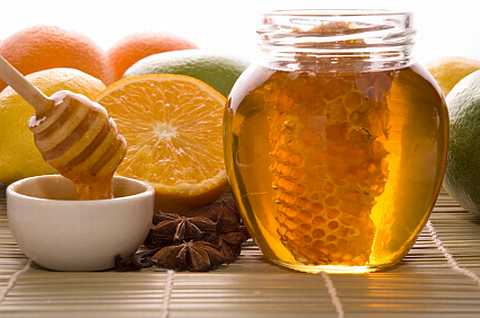

Honey also contains tiny amounts of several compounds thought to function as antioxidants, including chrysin, pinobanksin, vitamin C, catalase, and pinocembrin.The specific composition of any batch of honey depends on the flowers available to the bees that produced the honey.
Typical honey analysis.
- Fructose: 38.2%
- Glucose: 31.3%
- Sucrose: 1.3%
- Maltose: 7.1%
- Water: 17.2%
- Higher sugars: 1.5%
- Ash: 0.2%
- Other/undetermined: 3.2%
Honey has a density of about 1.36 kilograms per liter (36% denser than water).
Subscribe to:
Posts (Atom)
