Oct 18, 2011

How Youth Drive Change - UNESCO Youth Forum 2011

          Today’s youth are raising their voices to shape the present and futures of their countries. They want to be heard, to be included in decision-making debates and to make change. Student engagement, social innovation, fostering democracy, youth employment, conflict and sustainable development are among the issues that will be discussed on the floor of the 7th UNESCO Youth Forum. 
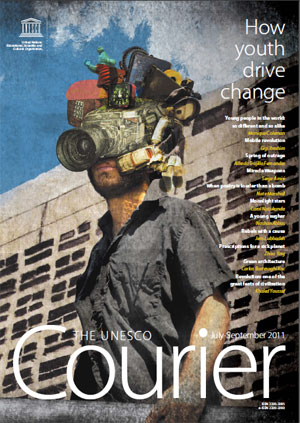


Held from 17 to 20 October 2011 in UNESCO Headquarters in Paris, the Forum brings together youth delegates, civil society participants, UN entities, intergovernmental organizations, academics and the private sector. Participants will discuss, debate, and exchange ideas on the Forum’s timely themes and have the opportunity to present their recommendations to the representatives of Member States during the 36th UNESCO General Conference. 

Oct 17, 2011

Marijuana replaces Ritalin treatment in Children and Adolescents with ADD/ADHD

Brief Overview 
Attention-deficit/hyperactivity disorder (ADHD) is also known as hyperactivity or attention deficit disorder (ADD). ADHD is a common condition that affects children and adolescents, while ADD is more common in adults.
        The National Institute of Mental Health (NIMH) estimates that 3% to 5% of children have ADHD. Some experts, though, say ADHD may occurs in 8% to 10% of school age children. Experts also question whether kids really outgrow ADHD. What that means is that this disorder may be more common in adults than previously thought.

       Children with ADHD generally have problems paying attention or concentrating. They can't seem to follow directions and are easily bored or frustrated with tasks. They also tend to move constantly and are impulsive, not stopping to think before they act. These behaviors are generally common in children. But they occur more often than usual and are more severe in a child with ADHD.

How to Turn your iPhone into a Microscope


       CellScope is a UC Berkeley project designed to enable microscopic image captures from a cell phone’s camera. At first it might sound like a pointlessly geeky project to do microscopy on a cell phone, but in fact it has important applications for mobile health services in remote areas. In some areas of sub-Saharan Africa and other developing areas of the world, access to health care of any kind is scarce, and it often falls upon poorly-equipped doctors or volunteers to take up the slack.

Since health care equipment is generally expensive to begin with, outfitting even a low-power microscope with a wireless transmitter capable of communicating with doctors at a remote location could easily run into the thousands of dollars. Not only that, but the equipment itself would likely be bulky, temperamental, and easily damaged. That's where CellScope comes in. Via an attachment, CellScope can turn a standard cell phone camera into a 5x to 50x microscope, essentially creating a miniaturized blood lab that can capture images and transmit them far more cheaply than traditional equipment.

Oct 7, 2011

The Blue Zones and The Secret of Longevity


        Dan Buettner is the team leader of  "The Blue Zones" which is a longevity research project funded by National Geographic. They are studying human longevity in various cultures around the world. In his book "The Blue Zones", Dan Buettner outlines the healthy habits, the longevity diets and the cultural and familial values that each longevity society upholds.
The name for the project was coined after Dan's team happened to be using a blue marker to circle areas with high rates of human longevity on a map. A blue zone is specifically a geographical region somewhere in the world that has exceptionally high rates of longevity. For example, Okinawan longevity is the best in the world, per capita. One in 2,000 Okinawans can expect to make it past 100, whereas the average American has a 1 in 100,000 chance (according to statistics from 1990).
Related Posts Plugin for WordPress, Blogger...