Showing posts with label Menstrual cycle. Show all posts

Mar 27, 2011

Facts about Intercourse during Menstruation


         Sex during periods is a matter of personal preference and cultural beliefs. Medically, it is safe to have sex during your period as long as you don't use it as a ticket to have unprotected sex.
       Deciding to have sexual intercourse requires knowledge about both the male and female reproductive systems, STDS, and birth control. Sex can become even more complicated when it comes to deciding when and where to do the deed; in particular, you may find that you or your partner want to have sex during your menstrual period. But is sex during your period safe? Here are some answers to a few of the most common questions regarding period sex. 

Is it Safe To Have Sex During Your Period?
Many men and women worry that having sexual intercourse during a woman's period is unhealthy. Though frowned upon in many cultures and faiths, sexual intercourse during menstruation is entirely normal and completely healthy.
Worries about this act generally stem from societal misconceptions about menstrual blood: most girls are taught from a young age that their menstrual blood is unclean and "dirty," and therefore should be hidden and contained at all times. However, menstrual blood is an entirely natural bodily fluid, and does not in anyway affect a man's penis or a woman's reproductive tract. As long as you are engaging in safe and protected sexual intercourse, it is entirely alright for you and your partner to have sex during your period.

Benefits of having sex during menstruation:

  • Sex may help relieve pre or post menstrual symptoms if you get an orgasm
  • Endorphins released during an orgasm are natural painkillers and mood lifters, which can allay cramps, headaches, mild depression, and irritability associated with periods
  • Some women also claim enjoying sex more when they are menstruating because of the feelings of fullness in the pelvic and genital areas

Feb 2, 2011

Causes of Amenorrhea

What is Amenorrhea?
Amenorrhea is the absence of menstrual bleeding. Amenorrhea is a normal feature in :
  • prepubertal, 
  • pregnant,
  • postmenopausal females.

In females of reproductive age, diagnosing amenorrhea is a matter of first determining whether pregnancy is the etiology. In the absence of pregnancy, the challenge is to determine the exact cause of absent menses. This article reviews the physiologic aspects of menstruation and presents an approach for ascertaining the etiology of amenorrhea. Only the main components of amenorrhea are highlighted. Many minor components of physiology are important but are beyond the scope of this article.

Pathophysiology
The menstrual cycle is an orderly progression of hormonal events in the female body that results in the release of an egg. Menstruation occurs when an egg released by the ovary remains unfertilized; subsequently, the soggy decidua of the endometrium (which was primed to receive a fertilized egg) is sloughed in a flow of menses in preparation for another cycle.

Aug 11, 2010

Birth Control Methods - Hormonal Contraceptives (III)


Hormonal Contraceptives


Implants

The US Food and Drug Administration (FDA) approved the contraceptive use of levonorgestrel implants (Norplant) in 1990. This method consists of 6 silicone rubber rods, each measuring 34 mm long and 2.4 mm in diameter and each containing 36 mg of levonorgestrel. The implant releases approximately 80 mcg of levonorgestrel per 24 hours during the first year of use, achieving effective serum concentrations of 0.4-0.5 ng/mL within the first 24 hours. The rate of release decreases to an average of 30 mcg/d in the latter years of use. Release of the progestational agent by diffusion provides effective contraception for 5 years. Contraceptive protection begins within 24 hours of insertion if inserted during the first week of the menstrual cycle. The rods are inserted subcutaneously, usually in the woman's upper arm, where they are visible under the skin and can be easily palpated.1,2
The mechanism of action is a combination of suppression of the LH surge, suppression of ovulation, development of viscous and scant cervical mucus to deter sperm penetration, and prevention of endometrial growth and development.
Efficacy
The contraceptive efficacy of the method is equivalent to that of surgical sterilization. Overall, pregnancy rates increase from 0.2% in the first year to 1.1% by the fifth year.
Advantages
The longevity of its effectiveness is an advantage. Its effectiveness is not related to its use in regards to coitus. Exogenous estrogen is absent. Prompt return to the previous state of fertility occurs upon removal. No adverse effect on breast milk production occurs.

Birth Control Methods (I)

        
         The practice of contraception is as old as human existence. For centuries, humans have relied on their imagination to avoid pregnancy. Ancient writings noted on the Kahun papyrus dating to 1850 BCE refer to contraceptive techniques using a vaginal pessary of crocodile dung and fermented dough, which most likely created a hostile environment for sperm. The Kahun papyrus also refers to vaginal plugs of gum, honey, and acacia. During the early second century in Rome, Soranus of Ephesus created a highly acidic concoction of fruits, nuts, and wool that was placed at the cervical os to create a spermicidal barrier.
             Today, the voluntary control of fertility is of paramount importance to modern society. From a global perspective, countries currently face the crisis of rapid population growth that has begun to threaten human survival. At the present rate, the population of the world will double in 40 years; in several of the more socioeconomically disadvantaged countries, populations will double in less than 20 years.
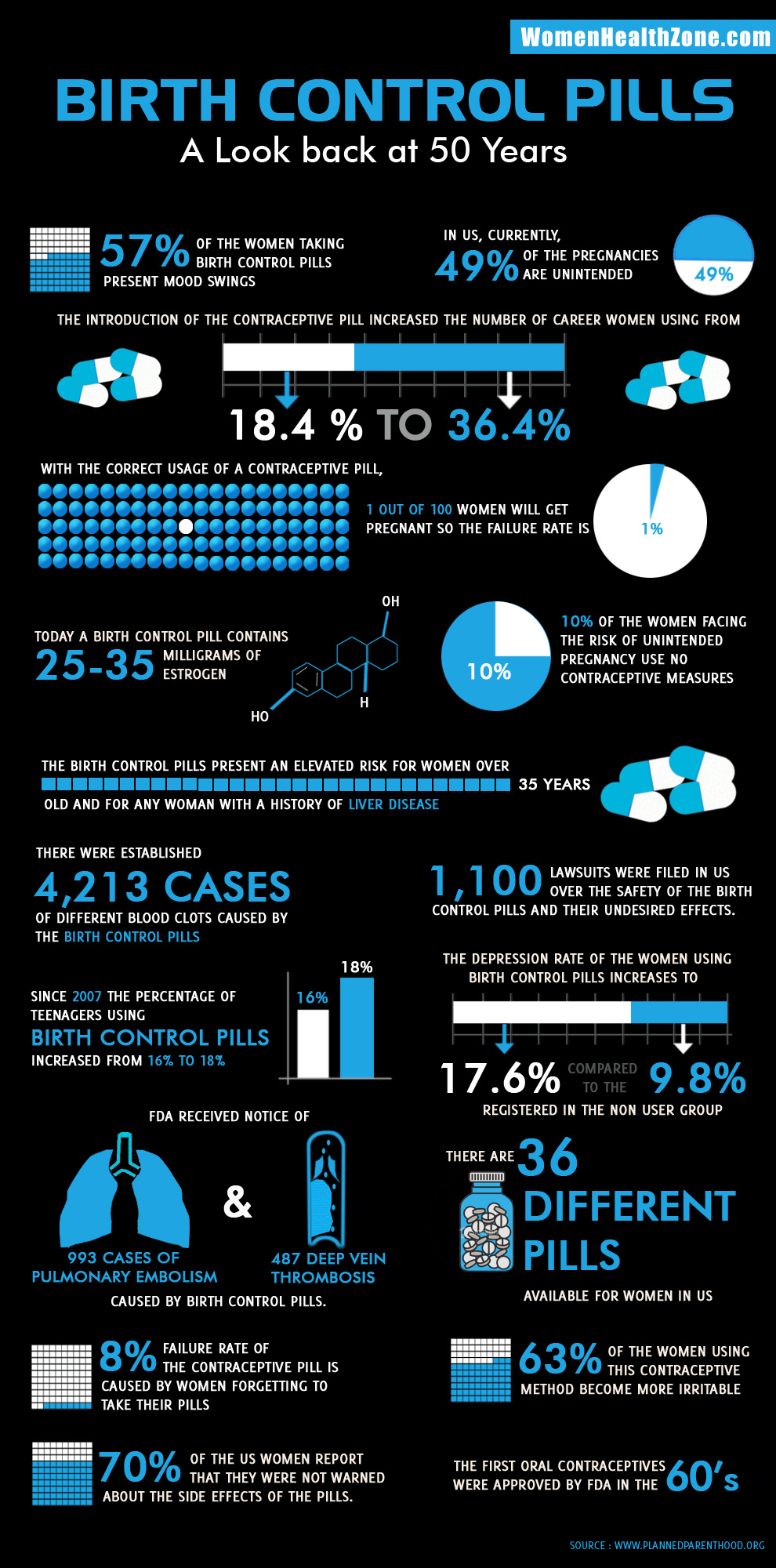
On a smaller scale, effective control of reproduction can be essential to a woman's ability to achieve her individual goals and to contribute to her sense of well-being. A patient's choice of contraceptive method involves factors such as efficacy, safety, noncontraceptive benefits, cost, and personal considerations. This article addresses the predominant modes of contraception used in the United States, along with the safety, efficacy, advantages, disadvantages, and noncontraceptive benefits of each.

 Click to zoom in
Related Posts Plugin for WordPress, Blogger...